DNSYE · DO NOT SCRATCH YOUR EYES
DNSYE PUBLICATION
Middlesbro Preview

With Middlesbrough flying high and looking every inch like promotion contenders, you'd imagine confidence would be overflowing on Teesside. But Dana from The Boro Breakdown joins us for The Opposition View with a familiar warning: no matter how well Boro are playing, a trip to Vicarage Road has an unfortunate habit of ending in disappointment.</em>
With Middlesbrough flying high and looking every inch like promotion contenders, you'd imagine confidence would be overflowing on Teesside. But Dana from The Boro Breakdown joins us for The Opposition View with a familiar warning: no matter how well Boro are playing, a trip to Vicarage Road has an unfortunate habit of ending in disappointment.

Middlesbrough have enjoyed a remarkable opening to the campaign, suffering just one league defeat, against Blackburn Rovers. For Dana, there is little doubt that Boro have established themselves among the Championship's strongest sides.
“Boro's start to the season has been just shy of perfect really. I mean, the only blemish on it is the fact that we lost to Blackburn, which is our only defeat so far this season.”
Yet despite the results, Dana admits that the performances earlier in the campaign weren't always entirely convincing. There were moments when Kim Hellberg's side appeared to be searching for their rhythm, particularly around the first international break.
“After the Birmingham game, there were quite a few question marks that were just lingering around Kim Hellberg and the team, and I must admit I was curious myself as to what I was watching.”
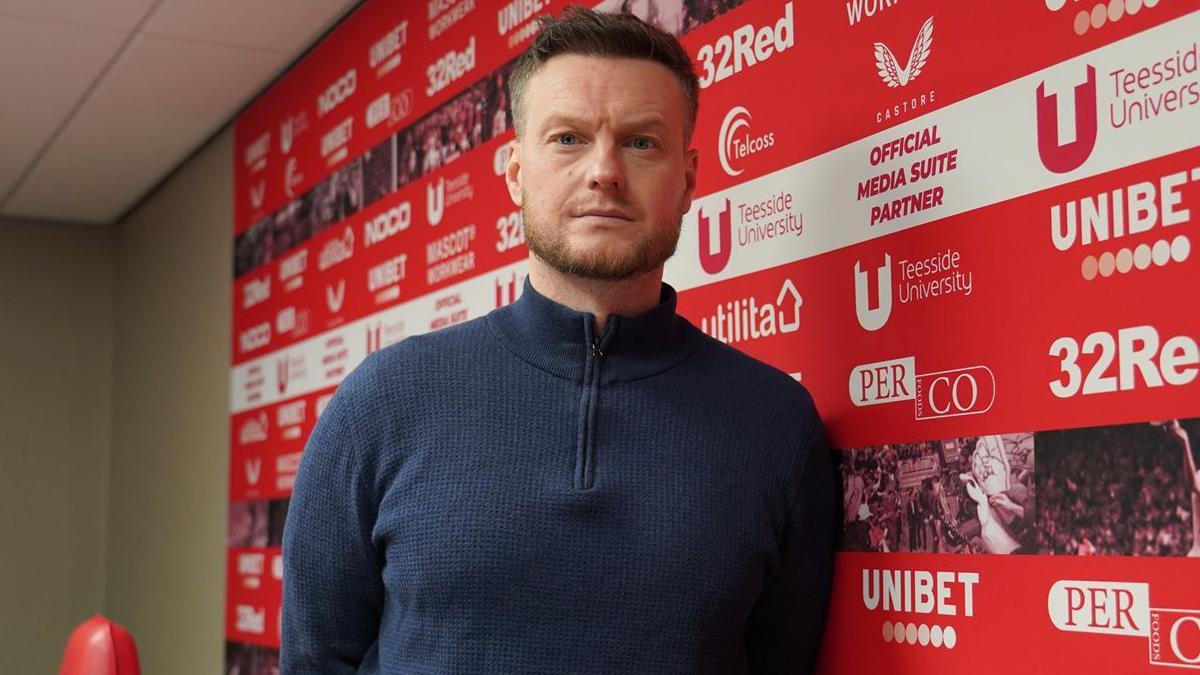
The explanation, Dana believes, was relatively straightforward. Hellberg was still discovering his strongest starting eleven, carefully managing playing time and allowing his squad to adapt to the demands of the new campaign.
“I think it was mainly just because he hadn't quite settled on his best starting 11. I think he was managing a few players' minutes. And there was probably just a little bit of adapting going on.”
Whatever uncertainties existed during the opening weeks appear to have disappeared as Middlesbrough found their stride during October.
“We've really, really clicked in October, and hopefully we can carry that through to November as well.”
Dana's admiration for Hellberg is unmistakable, with the Boro boss earning considerable praise for the quality of football his side can produce.
“When we really get purring, I think we are the best team in the league by a considerable distance.”
It is not simply the attacking talent that excites Dana, but the organisation, movement and ability to dismantle even the most stubborn opposition.
“The football that we play, the way that we can manufacture space against even compact teams and really exploit that, the rotations, just the attacking quality, the control as well that Kim Hellberg's Middlesbrough often has is very exciting.”
That confidence might sound ominous for Watford, particularly given the contrasting moods surrounding the two clubs. However, Dana immediately follows this glowing assessment with a rather less reassuring conclusion for Boro supporters.
“Which means we will lose to Watford.”
Football supporters are naturally suspicious of optimism, but Dana seems particularly convinced that Middlesbrough's excellent form counts for precious little when a visit to Hertfordshire appears on the fixture list.
There are, apparently, certain fixtures that Boro supporters simply resign themselves to losing.
“One of them is our annual defeat to Bristol City,
and the other one is Boro losing at Vicarage Road.”
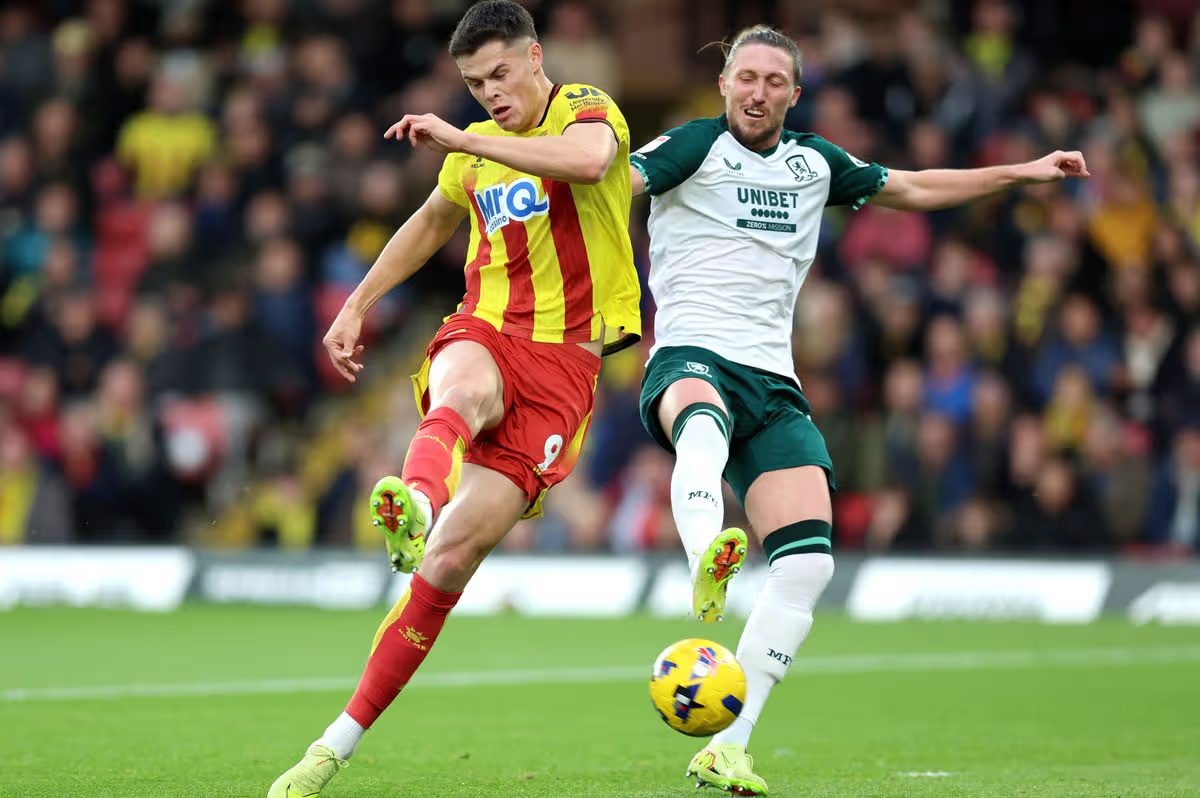
It is an assessment delivered with the weary certainty of someone who has seen this particular film before, knows the ending and still buys a ticket.
“It does not matter how bad of a rut Watford Football Club are in, I can almost guarantee you you'll beat us.”
Dana describes this phenomenon as “typical Boro”, a familiar ability to undermine excellent form with a result that makes absolutely no sense on paper.
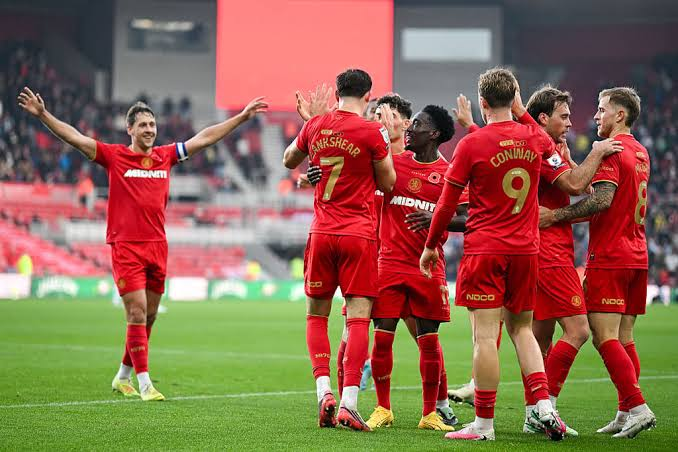
For Watford supporters desperately searching for reasons to be cheerful, it may be the most encouraging piece of analysis they've heard for some time.
Having spent much of the conversation explaining why Middlesbrough might well be the best team in the division, Dana finishes by predicting precisely the sort of result that would leave everyone scratching their heads.
“Our second defeat of the season will probably come at Vicarage Road. So I'm gonna go for a proper shite 2-1 Watford victory.”
There is, of course, a method to this apparent pessimism. Dana is hoping that predicting disaster might somehow prevent it.
“Hopefully I've spoke that into existence and jinxed it. A bit of reverse psychology if you will, and we'll win.”

And with a final “Enjoy the rest of the season if you can” followed by “Up the bloody Boro”, Dana signs off, leaving us with the curious prospect of a supporter whose team has lost just once all season being considerably more worried about Saturday's result than many of the home fans.
Whether it's genuine footballing superstition or an elaborate attempt at reverse psychology, we'll discover soon enough.
Our thanks to Dana from The Boro Breakdown for providing this week's Opposition View.
Never Mind the Quality, Feel the Points – Watford 1–0 Lincoln City
Three points, a clean sheet and the Graham Taylor Cup. Watford's victory over Lincoln City delivered plenty of reasons to be grateful, even if the football itself offered precious little entertainment. The Do Not Scratch Your Eyes Post-Match Phone-In found supporters relieved by the result, unconvinced by the performance and increasingly concerned about the direction of the club.
Stephy Mavididi's decisive strike secured a much-needed victory at Vicarage Road, but there was little suggestion among those joining the phone-in that Watford had suddenly turned a corner. Following the collapse against Norwich City, the Hornets at least demonstrated sufficient determination to see out a narrow lead, although the quality of the football left plenty to be desired.
Pete established the mood early, describing what he had witnessed as "a genuinely horrendous game of football to watch", before offering perhaps the most appropriate summary of the evening: "Tonight is absolutely all about never mind the quality, feel the points."
Greg from Wendover was considerably less diplomatic in his assessment.
"Lincoln's shit, Watford were shit, and the referee was shit,"
he declared, before expressing serious concerns about what Middlesbrough might do to Watford in their next fixture.
Danny offered a more pragmatic assessment, pointing to consecutive home victories and the importance of collecting points regardless of the entertainment provided. "It wasn't spectacular. It was pretty crap most of it, but, you know, we've got the three points, and it's back-to-back home wins."
The wider discussion reflected a familiar dilemma. Lincoln had failed to provide much attacking threat, but had Watford contributed to that through their own defensive work? There was certainly more physical commitment than had been apparent in recent performances, even if the passing and movement remained well below expectations.
Mavididi's winning goal was the one genuine moment of attacking quality in an otherwise disjointed contest. Cutting inside before finishing, the winger provided the difference between two teams struggling to create meaningful opportunities.
The goal also prompted a rather enjoyable admission from Kaiden, who had previously questioned the wisdom of signing another winger.
"Stephy Mavrididi, if you'll excuse the expression, he stuffed one right up me today, and fair play to him and do it again then on Saturday if you would be so kind."
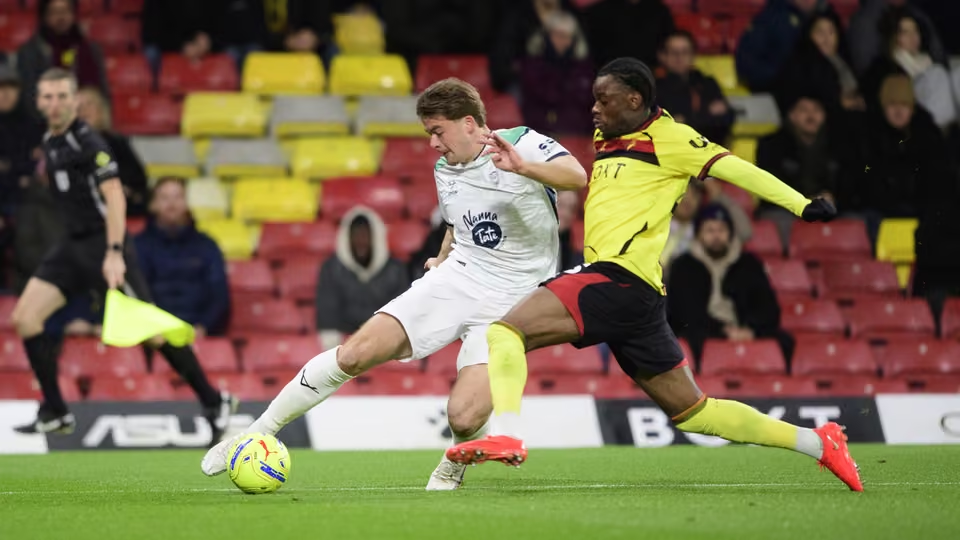
Kaiden's choice for man of the match, however, was Matty Pollock, whose defensive contribution earned particularly enthusiastic praise. "My man of the match is Matty Pollock. I thought he was fantastic today. He did not put a foot wrong."
Mamadou Doumbia also received recognition for his energy following his introduction, while Iker Bravo's industry impressed both Pete and several callers. His movement and willingness to seek possession were evident, even when teammates failed to find him with the return ball.
Krépin Diatta emerged as another positive from the evening. Danny argued that his pace and attacking instincts offered something different from the more conservative approach of Traoré, while Noah highlighted one particularly important recovery challenge late in the game.
That tackle became one of the evening's talking points, not simply because of its defensive importance but because Diatta celebrated it with an enthusiasm rarely associated with a routine clearance. For some, it was excessive. For others, it represented precisely the commitment that had been missing.
Kayembe even managed to attract a little praise from Kaiden, a development sufficiently unexpected to warrant a ceremonial repeat of the statement on air. There are occasions when three points are not the evening's biggest surprise.
Away from the football, one of the evening's most substantial discussions concerned the protest organised by young supporter Kaiden against the club's ownership.
The demonstration outside Vicarage Road was relatively small but peaceful, with those attending making their opposition to the current regime clear. Kaiden joined the phone-in to thank everyone who had supported the initiative, including Badly Drawn Watford, who had attended from early in the evening.
"It means a lot for anyone to turn up to these things," Kaiden explained. "I've put myself in a position now and I've got to take the criticism, which is fine."
He believed the protest had attracted attention from within the club, although he acknowledged that the attendance was modest. His own disappointment about the numbers was emphatically rejected by the other contributors.
Greg praised his willingness to act, while PJ pointed out that organising a demonstration required considerably more commitment than expressing frustration online. Noah, who admitted having previously criticised Kaiden, was similarly complimentary.
The conversation developed into a wider discussion about how supporter dissatisfaction might be translated into meaningful, coordinated action.
Paul suggested that visible demonstrations inside the stadium might prove more effective than expecting supporters to change their matchday routines. Drawing comparisons with Manchester United's green-and-gold campaign, he proposed scarves, balloons or other easily recognisable symbols.
Pete stressed the importance of reaching supporters beyond social media, arguing that effective organisation required participation from those who might never engage with the arguments taking place online.
"The conversation needs to come into the ground and offline," he suggested, while also emphasising the need to avoid alienating supporters holding different opinions.
The discussion also touched upon the 1881 supporters' group and whether further communication should follow its representative's meeting with Gino Pozzo. No single solution emerged, but the contributors broadly agreed that coordinated, accessible action would have a better chance of gaining momentum.
The club's controversial stay at Sopwell House provided another substantial talking point, with Pete exploring the Italian football tradition of the ritiro — a retreat intended to concentrate players' attention and reinforce discipline during difficult periods.
He explained that the concept can include a more punitive element when performances fall below expectations, raising the question of whether the exercise had genuinely contributed to Watford's improved determination or simply highlighted a cultural disconnect between the club's ownership and its players.
Paul favoured the latter interpretation, questioning whether the decision had originated with the head coach and suggesting that imposing such measures could undermine his authority.
"I think from a player's perspective it just shows them who's in control, and it disconnects you from the head coach."
He also expressed concern about reports of personnel changes and the wider working environment at the club. These remained concerns raised by a supporter rather than independently established conclusions.
The discussion illustrated how deeply the ownership debate has become intertwined with the football itself. Even a victory could not entirely remove questions about recruitment, management structures and the relationship between the club and its supporters.
PJ, meanwhile, found a more entertaining angle in the whole affair, suggesting that the players might finally be released from "HMP Sopwell Prison" following their victory. The possibility of a holiday camp franchise was also explored through an entirely unnecessary musical contribution. Some punishments, it seems, extend well beyond the training ground.
The inaugural Graham Taylor Cup provided another subject for discussion, with Watford receiving the trophy following the victory over one of Taylor's former clubs.
There was predictable amusement about the modest size of the silverware, although Pete welcomed the principle of celebrating the connection between the two clubs and the involvement of Rita Taylor in the presentation.
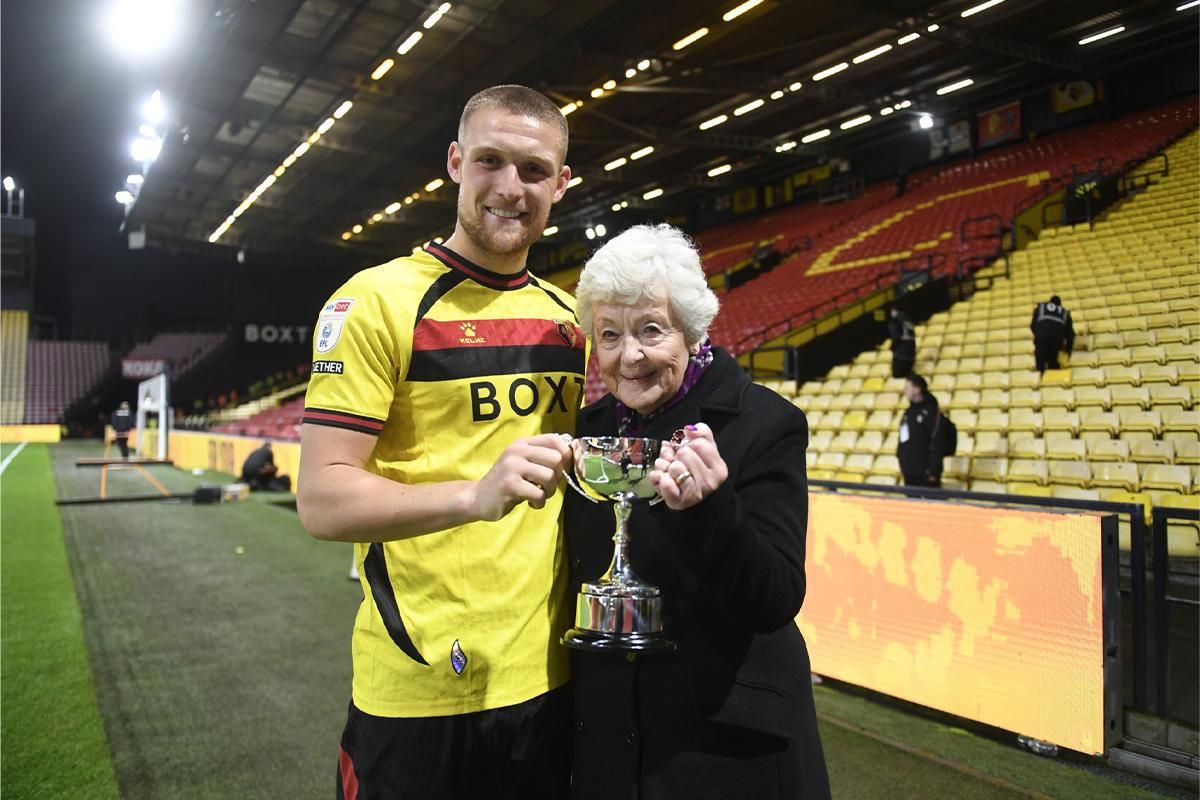
PJ was particularly enthusiastic about Watford's rapidly expanding trophy collection, joking: "First, we win the 2019 FA Cup, now we've won the Graham Taylor Cup. It's all coming up Watford, baby."
More seriously, the conversation returned repeatedly to the atmosphere surrounding the club. Greg described a sense of apathy among supporters, while several contributors questioned whether the football currently being produced was capable of rebuilding enthusiasm.
Yet there were different interpretations of what supporters should take from the result. Danny remained determined to support the players despite his frustration with the ownership, while others considered the performance further evidence of more fundamental problems.
The discussion also examined Watford's increasingly streetwise approach to protecting their lead. Goalkeeper Ravaglia and the team's willingness to disrupt the opposition prompted debate about the distinction between effective game management and unnecessary gamesmanship.
For a side that has so often been accused of lacking determination, winning ugly might represent progress. Whether it represents enough progress is another matter entirely.
The traditional five-word reviews produced their usual combination of frustration, sarcasm and reluctant appreciation.
Among the contributions were "Not pretty, but three points," from Ken Green, "That game, League 1 standard," from Alan WFC, and "Middlesbrough won't be as shit," from Match Worn Shirts.
Others were less interested in the immediate result than the wider circumstances surrounding it. Comments about the manager's future, the ownership and the limited entertainment value reflected a support base struggling to find much confidence in what lies ahead.
One contributor described feeling increasingly disconnected from the club despite decades of following Watford, prompting Pete to underline that supporters should not be instructed how to feel about their team.
There was also discussion about the absence of Eduardo Bove and the potential of Naby Sarr, with the latter's introduction receiving an encouraging reception from the crowd. The suggestion was that Watford possess individuals capable of making a difference, but are not consistently providing either the opportunities or the collective framework for them to flourish.
Attention inevitably turned towards Middlesbrough and the prospect of facing one of the Championship's strongest sides.
The suspension of Giorgi Chakvetadze's fellow midfielder Kiprianu — discussed as Kipriani in the phone-in — added to concerns about the midfield combination available to Javi Gracia's successor, while several callers questioned whether Watford could withstand a considerably more dangerous attacking opponent.
Greg feared a heavy defeat and suggested that another disappointing result could have consequences for head coach Edin Dionisi during the international break.
Danny was more hopeful, although his expectations were understandably modest. "If you just offered me a point, mate, I think that, that would be amazing if we can get a point."
The absence of any real conviction about Watford's ability to compete with Middlesbrough was telling. Victory over Lincoln had delivered three valuable points, but little reassurance that the underlying problems had been resolved.
Pete's closing observation was perhaps the fairest assessment of the night. Watford had beaten the team placed in front of them, and the opponents' shortcomings should not automatically invalidate the achievement.
There was a clean sheet, a winning goal, a trophy presentation and a welcome display of defensive determination. It was hardly an evening to remember for the quality of the football, but in the circumstances it was certainly a result worth keeping.
Whether those three points mark the beginning of something better or merely provide temporary relief remains to be seen. For now, Watford supporters can enjoy the unusual luxury of winning a football match while continuing to argue about almost everything else.
Which, come to think of it, is probably the most Watford thing of all.